

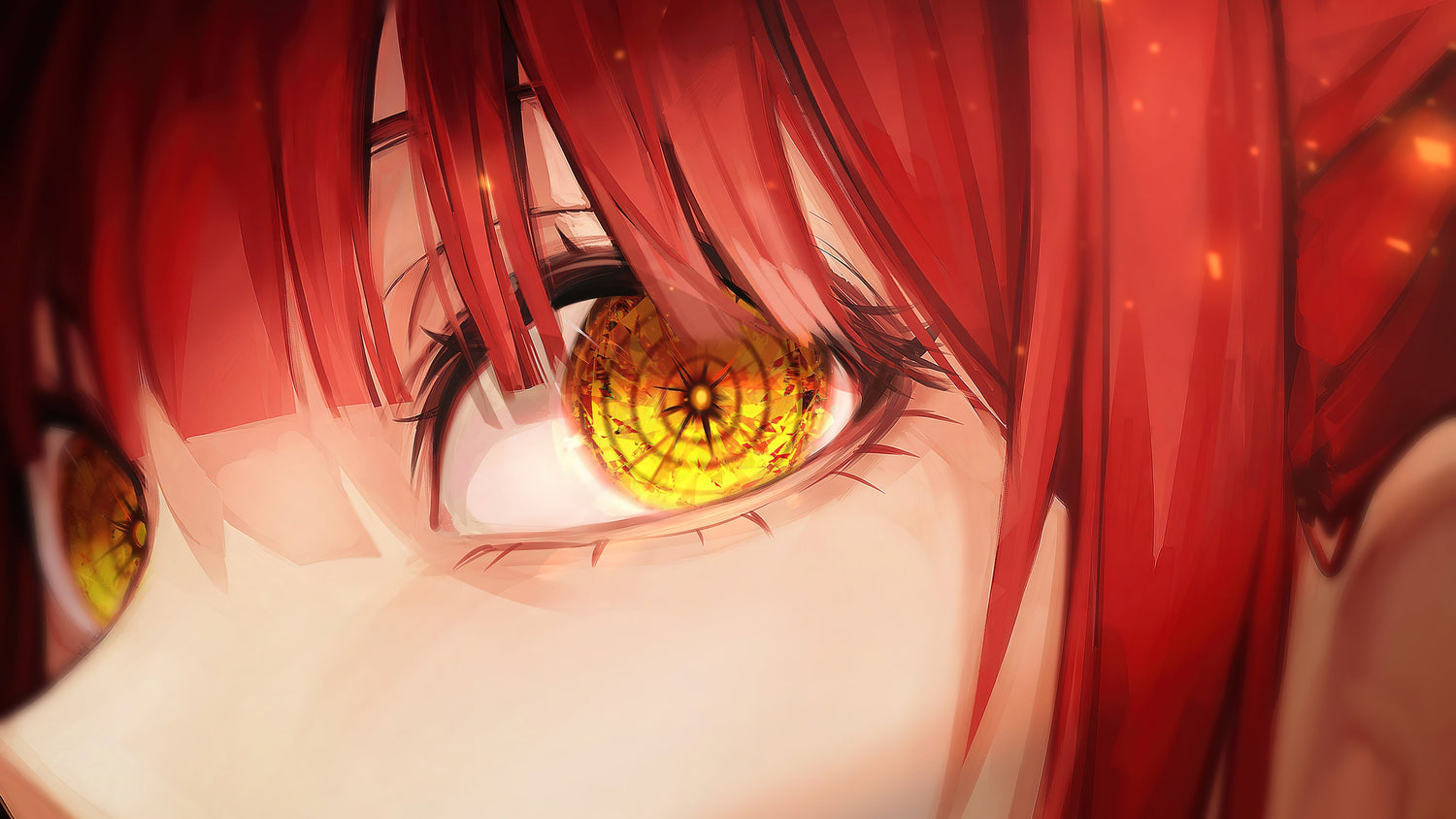
She looks at you. Not at you. Through you.
That's how Chainsaw Man starts. Not with a power explosion. Not with a speech about bonds. With a gaze. Makima on a packed train, eyes empty, smile that means nothing. Four panels that land harder than most full arcs in other series.
Tatsuki Fujimoto built something rare: a manga with a genuine visual language. And since MAPPA's 2022 anime adaptation, that language has moved off the page and onto the street.
Why Chainsaw Man Hits Different
Most shonen manga build their visual identity around power. Auras. Transformations. Final forms that fill the entire page. Fujimoto did the opposite.
Chainsaw Man is visually restrained. Almost mundane. Ordinary streets. Grey buildings. Characters in dark suits bleeding on concrete. The violence lands hard precisely because it's stripped of ceremony. No epic score. Just noise.
That restraint is the whole aesthetic. Fujimoto's paneling reads closer to 90s Japanese urban photography than to a traditional battle manga. Wide compositions, characters dwarfed by their environment, a near-monochrome palette. The rare color covers choose blood red, deep black, and skin that looks almost translucent.
The real made strange. Which is exactly what the best streetwear does.
Makima: The Aesthetic of Control
Makima might be the best-dressed character in modern manga. Not because her outfits are complex. Precisely because they're not.
White shirt. Tie. Dark coat. Office wear transformed into something unsettling by the way she inhabits it. She doesn't dress to impress. She dresses to disappear into normalcy while being impossible to ignore.
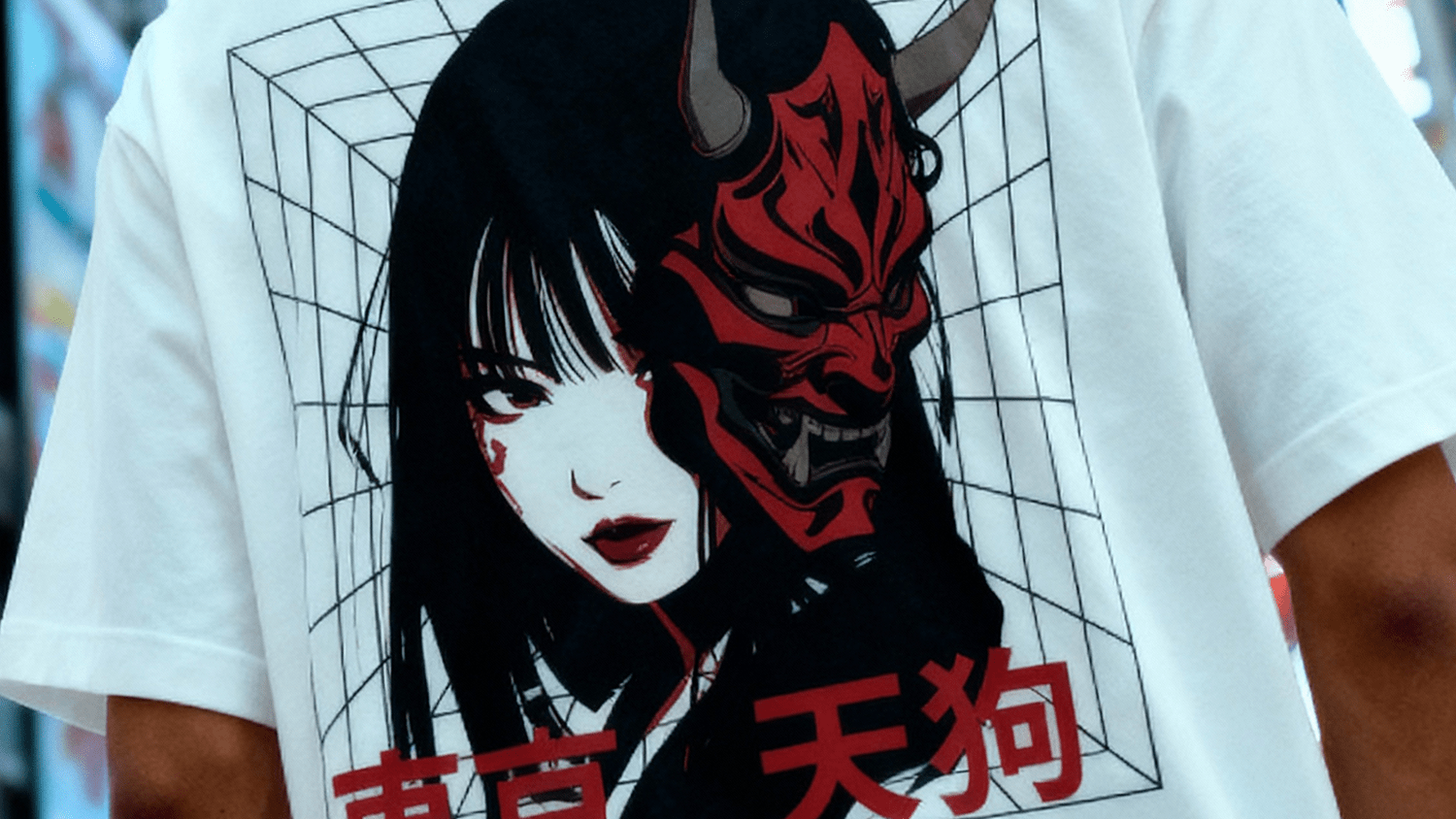
The Tokyo Tengu Makima tee works the same way. Nothing for people who don't know. Immediately readable for anyone who watched the anime to its end. Control as an aesthetic.

Power: Chaos as a Style Statement
Power is the exact opposite. If Makima is restraint, Power is excess. If Makima is the invisible that sees everything, Power is the one you cannot not see.
And yet she wears the same dark plain suits as the other Devil Hunters. What changes is the energy she brings to it. The bloodstains she never bothers to clean. The hair going everywhere. The horns that appear when she forgets to hide them.
Power represents something streetwear constantly chases without naming it: raw authenticity. She's not playing a role. She's exactly what she is at every moment, with a joyful violence that makes people uncomfortable because somewhere they recognize it.
The Power tee captures that energy. Not the clean victory pose. The raw instant. 230 grams of heavyweight cotton on your shoulders, no explanation needed.

The Contract and What You Pay
There's a thread in Chainsaw Man that doesn't get analyzed enough: everyone signs a deal. Humans contract with devils for power. Devils contract with each other. Denji himself is the result of a pact.
The contract as a narrative foundation makes CSM philosophically different. Nobody's clean. Everybody gave something to get something. The question isn't whether you signed. It's what you paid.
That's the Devil Pact design. The pact isn't betrayal. It's a decision. Conscious. Eyes open. You wear what you chose to carry.

Why CSM Streetwear Lasts
Other animes have had their moment. AoT, Naruto, Demon Slayer. Six months of everywhere, then saturation.
Chainsaw Man is built differently. Its aesthetic isn't tied to one iconic scene. It's built on a tone. A way of seeing. A refusal of conventions that resonates with a generation fluent in cultural codes and hungry for density.
The CSM fanbase came for Fujimoto's vision. They're not here for a power-up. They're here for characters who never behave the way you expect. Wearing CSM in the street today is a precise signal. A taste declaration.
What Tokyo Tengu Does with This Universe
There's a lot of Chainsaw Man clothing out there. Screenshot prints. Copied logos. Safe designs featuring Pochita because he's recognizable and easy.
That's not the approach here.
Tokyo Tengu goes for density. Not the most popular character. The most symbolically loaded one. Makima isn't on a tee because she trends. She's there because she represents something specific about control, about power that never announces itself loudly.
Power isn't here for fan service. She's here for what it says about you that you want to wear that chaos.
Chainsaw Man deserves to be worn seriously. 230 GSM heavyweight cotton, oversized dropped-shoulder cut, prints built to survive fifty washes. Not merch. Wearable art.
You wear what you understand.

Leave a comment
This site is protected by hCaptcha and the hCaptcha Privacy Policy and Terms of Service apply.